Description
We are pleased to offer you a bottle of one of the greatest wines ever made – Château Mouton Rothschild 1945.
Mouton Rothschild 1945 is so exceptional that Michael Broadbent MW, former head of Christie’s wine department, gave the wine six stars (in a five-star rating system) in his Vintage Wines book.
He wrote that “There is simply no other wine like it.”
In June 2001, he reckoned that Mouton 1945 was “Seemingly tireless – indeed another half century anticipated.”
Château Mouton Rothschild 1945 from Faringdon House
Provenance
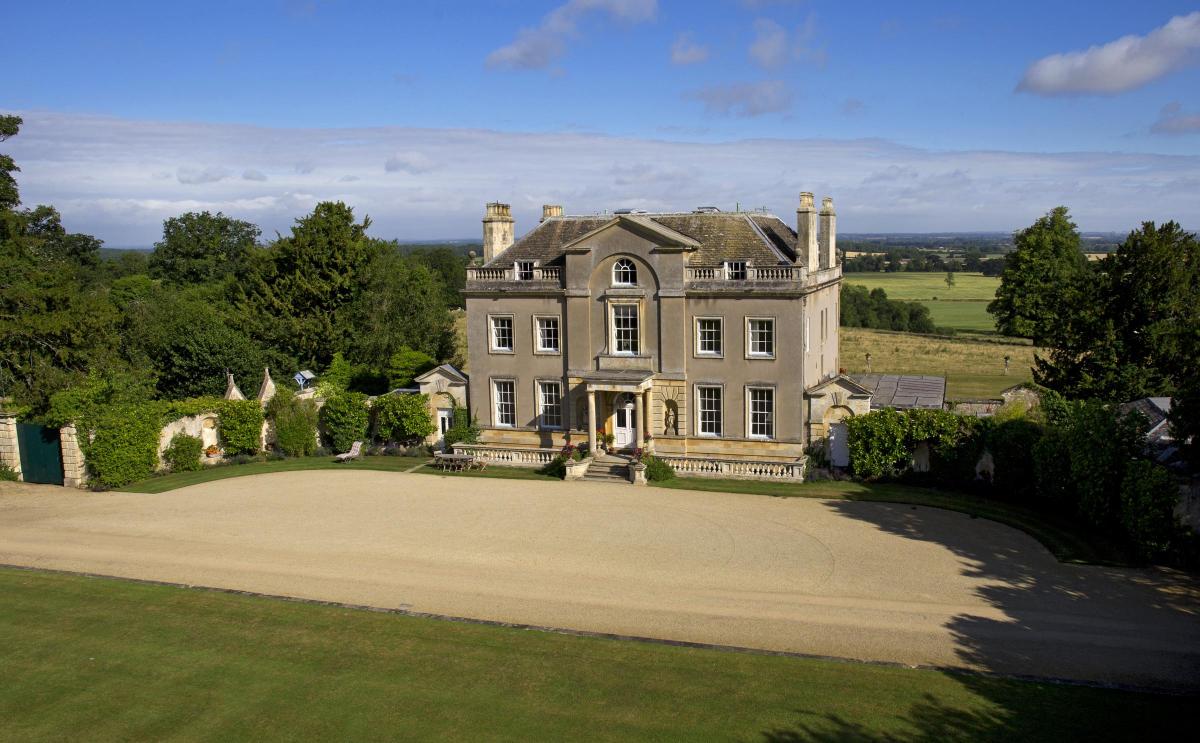
Our bottle of 1945 Château Mouton Rothschild comes from the cellar of Faringdon House, Oxfordshire, England.
They sold the house in December 2017 and auctioned its contents in April 2018.
The developers built Faringdon House, a Grade I-listed 14,510 square feet house in Faringdon, Oxfordshire, about 1770–85 for Sir Henry James Pye.
He was the first Poet Laureate to receive a fixed salary of £27 instead of the historic tierce of Canary wine.
Lord Berners
Faringdon was the country home of Gerald Hugh Tyrwhitt-Wilson, 14th Baron Berners, who inherited it in 1918.
Fictionalised as Lord Merlin in Nancy Mitford’s novel The Pursuit of Love, Berners was notorious for his eccentricity.
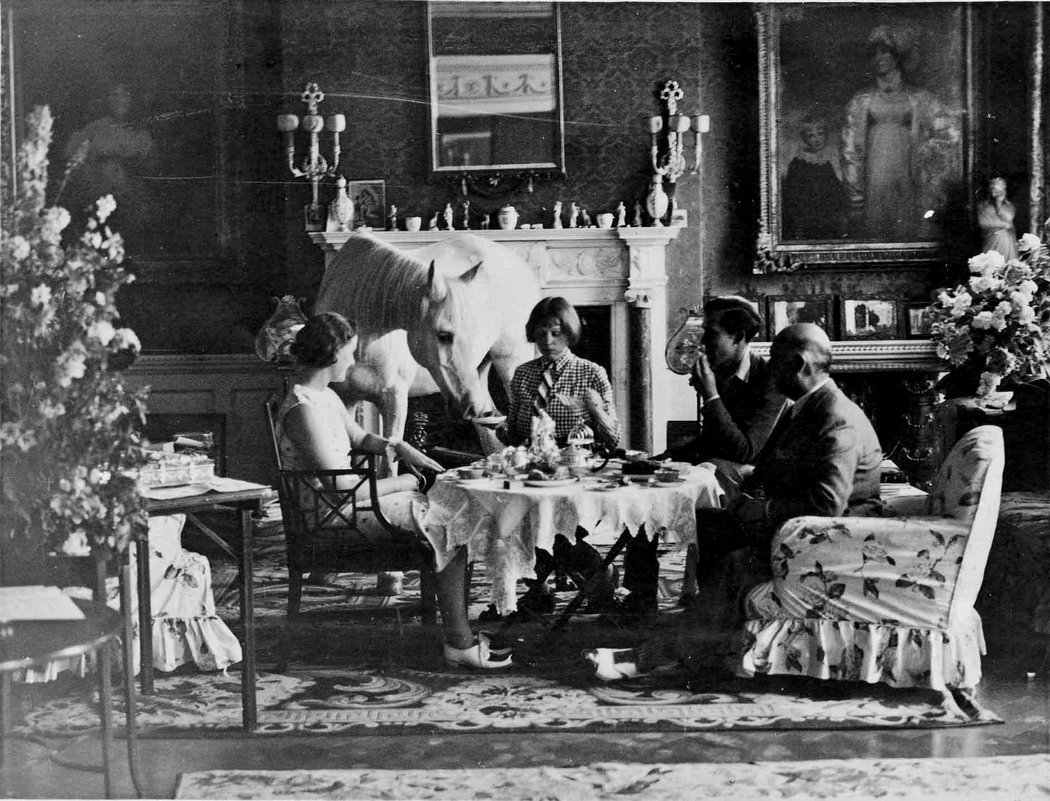
For example, he dyed pigeons in vibrant colours and entertained Penelope Betjeman’s horse Moti to tea.
Other visitors to Faringdon included Gertrude Stein, Igor Stravinsky, Salvador Dalí, and H. G. Wells.
It is believed that the bottle was acquired by Lord Berners before 1950 or by Robert Heber-Percy after 1951.
Possibly it was a gift from a visitor to Faringdon House.
Lord Berners was an enthusiastic and generous host but, according to Mark Amory’s 1998 biography of him, he was not a great wine connoisseur.
This might explain why someone never consumed this prestigious bottle.
Lord Berners moved into Faringdon House in 1931 with his companion Robert Heber-Percy.
People knew him as the “Mad Boy” for his uninhibited behaviour, which included horse riding naked through the surrounding woods.
In 1942, Heber-Percy married Jennifer Ross, and they had a daughter, Victoria.
Cecil Beaton photographed all four of them together in Faringdon House in September 1943.
Lord Berners died in 1950 and Robert Heber-Percy inherited the house.
Victoria Heber-Percy married the engineer and inventor Peter Zinovieff and they had three children.
Their eldest child is the writer Sofka Zinovieff, who inherited the entirety of her grandfather’s estate, including Faringdon House, in 1987.
Label
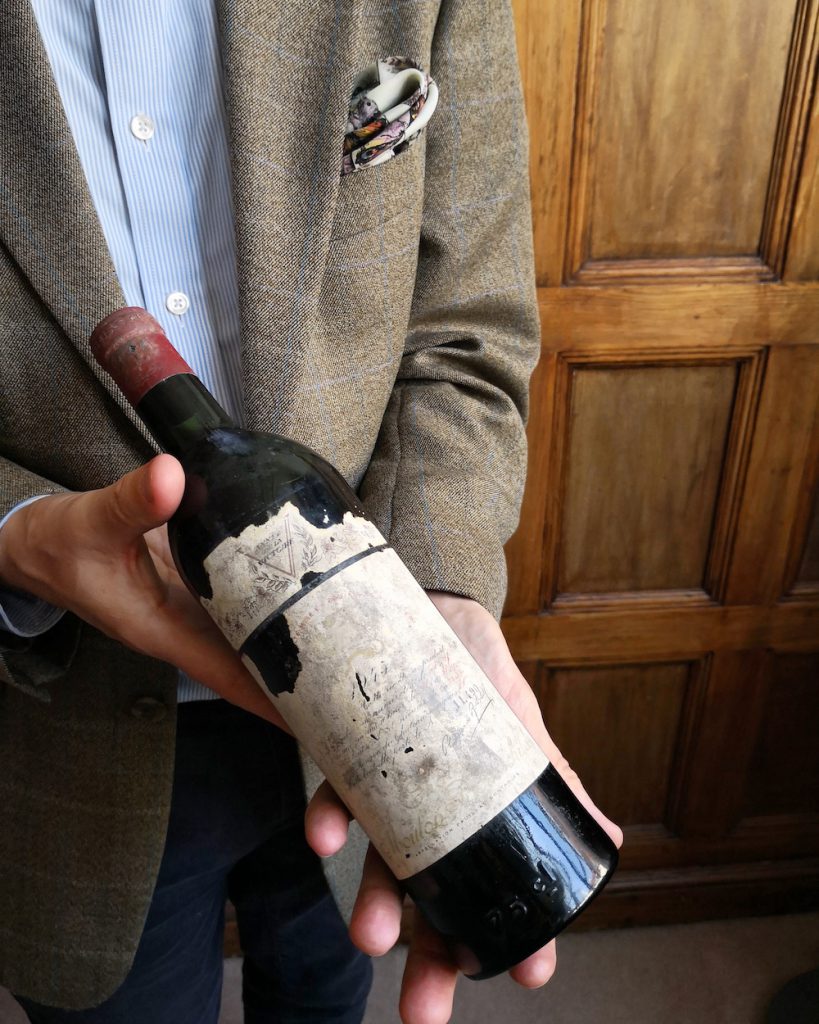
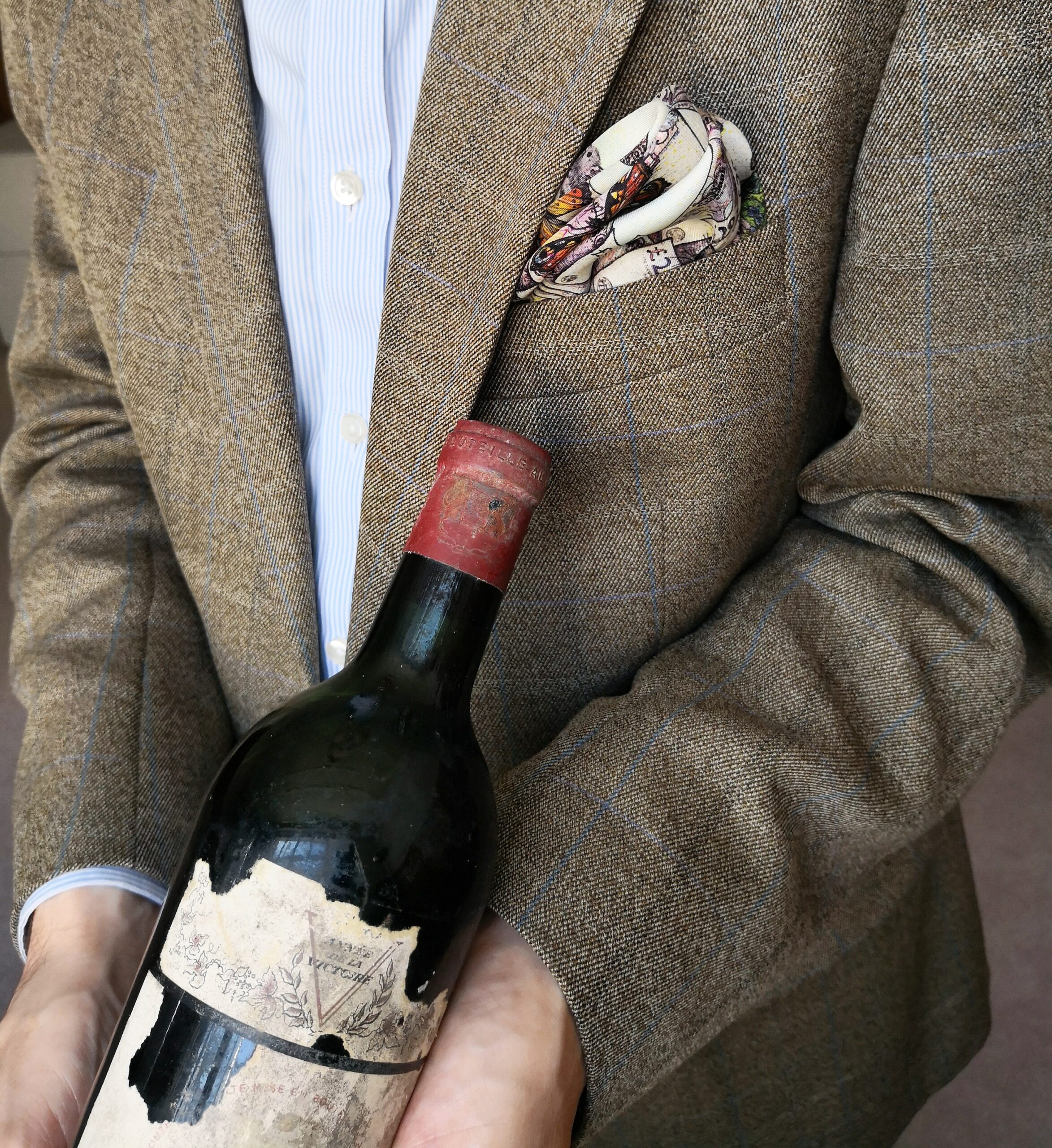
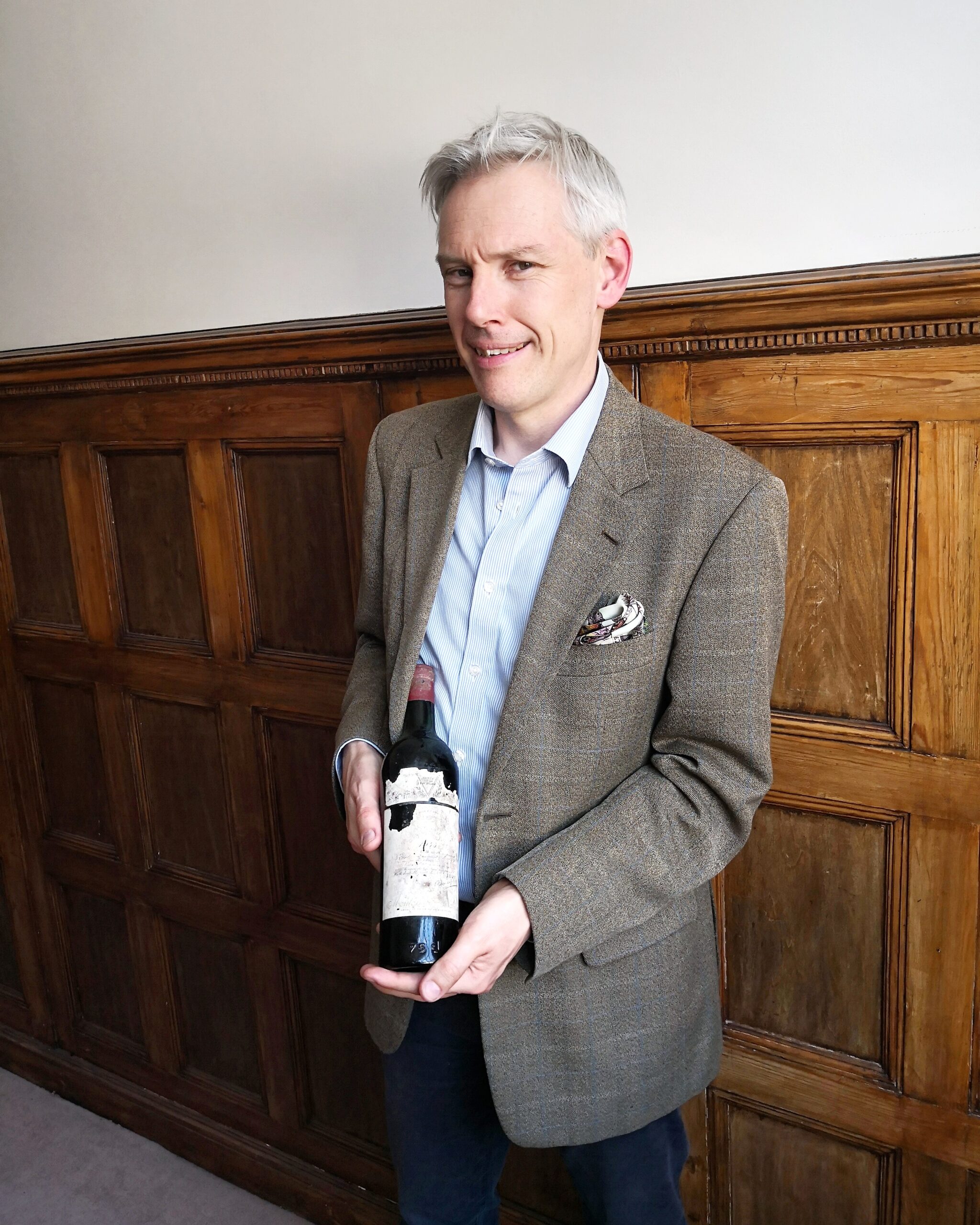
- Very damp-affected, with a small tear.
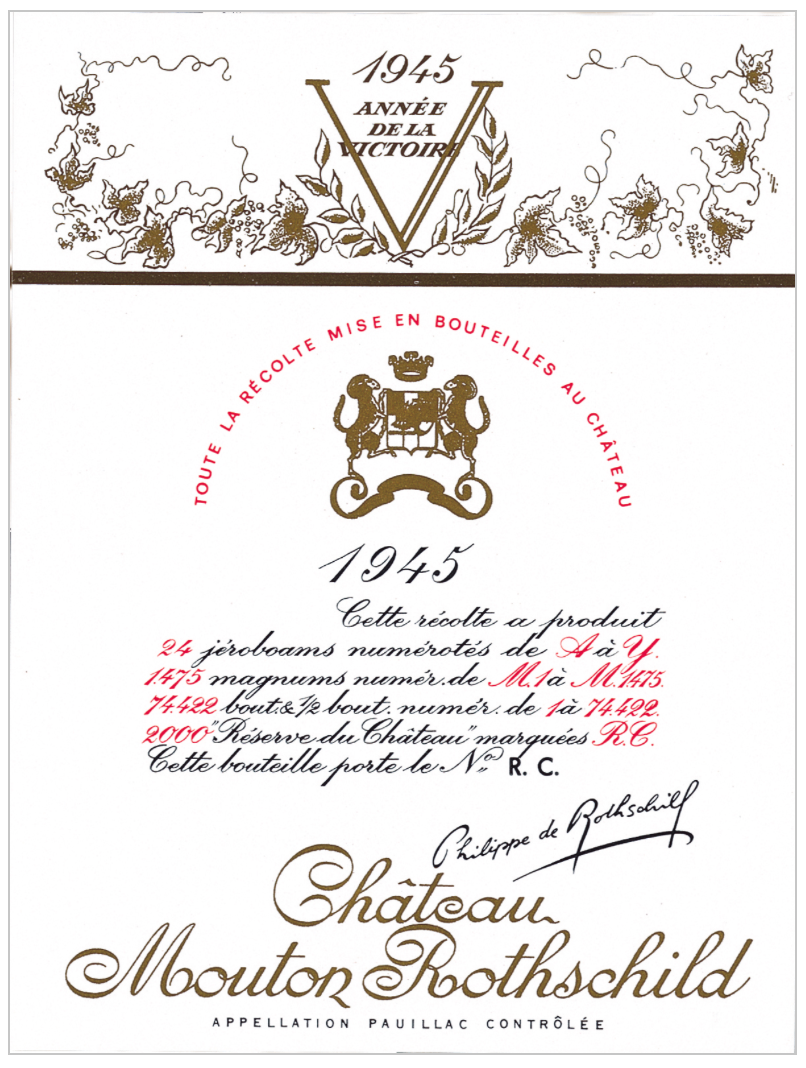
- The Mouton label format from 1945: Artwork at top, with the ram emblem.
- Also the five-digit declaration of the number of bottles produced, with a comma after the first two digits.
- Then the proprietor’s signature; the name of the wine; the year – all present and correct.
- The label should have two separate pieces, with the top “V” piece fractionally less wide than the main label.
- From 1945 to 1958, the designers placed the vintage below the ram emblem.
Capsule
-
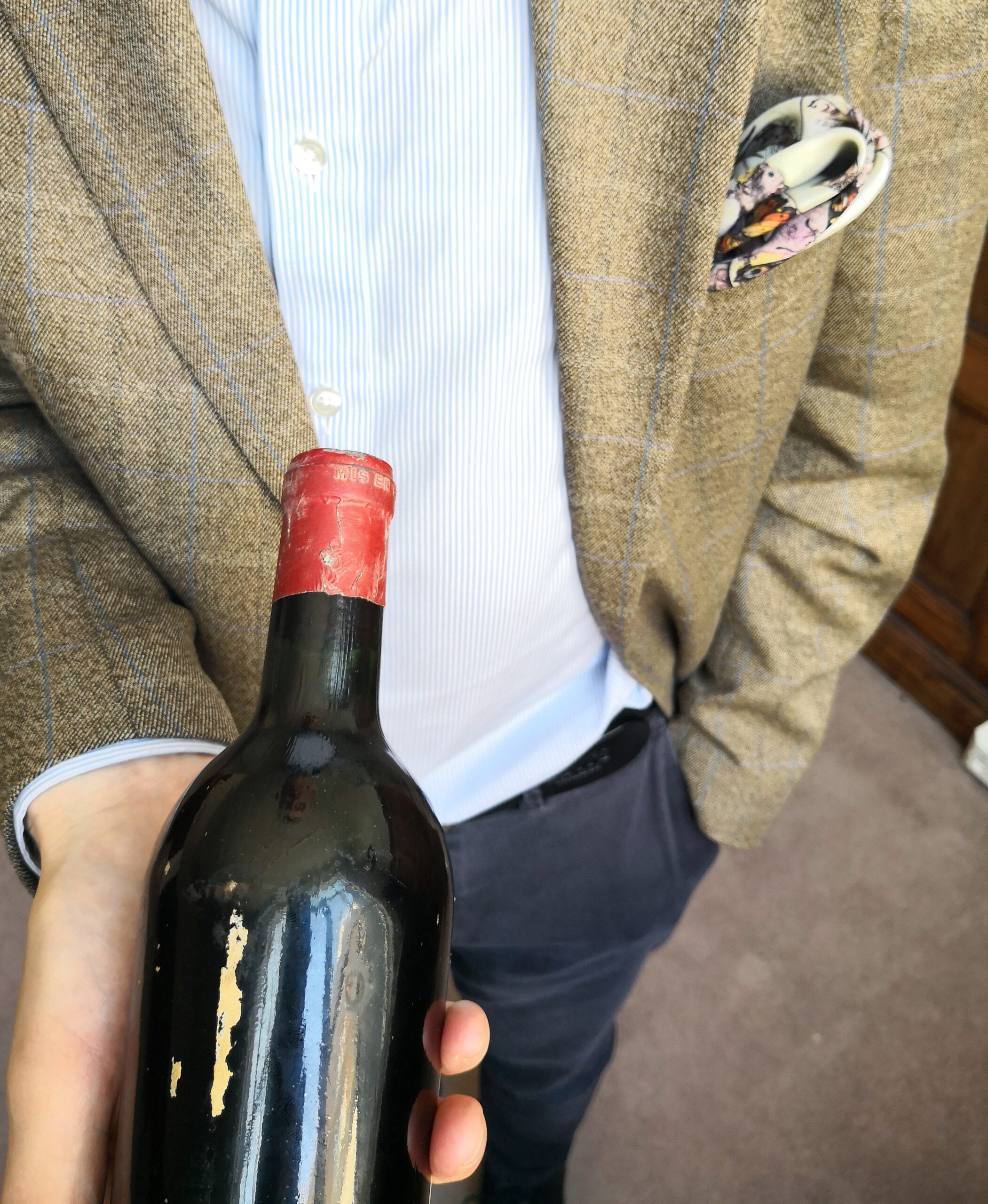
- Capsule shows some damp corrosion and fading..
- The top features an embossed “MOUTON ROTHSCHILD MEDOC” in circular uppercase and an “arrows” emblem in the centre, surrounded by an embossed circular line.
- The capsule at the top of the neck displays “MIS EN BOUTEILLE AU CHATEAU”; below this, a very faded embossed logo appears
Bottle
- They bottled Château Mouton Rothschild 1945 in a green, broad-shouldered bottle with the shoulders slightly wider than the base, so that the bottle tapers slightly towards the base – present and correct
- Authentic examples display the “75 cl.”
- A small streak of what appears to be white paint is on the back of the bottle, perhaps caused by long-term storage in a whitewashed cellar bin
CORK
-
- The capsule prevents any sight of branding but the cork appears to be in excellent condition, with no signs of seepage
WINE
- Top shoulder ullage, which is a normal and a good level for wines over 15 years old.
- For wines over 20 years old, this demonstrates excellent storage conditions.
- For a 74-year old wine, it’s exceptional and shows the benefits of the cool, damp country house cellar where it has been stored for half a century.
- The wine appears to be dark, with no signs of browning.
A perfect wine?
The US wine critic Robert Parker wrote of 1945 Château Mouton Rothschild:
“A consistent 100-point wine (only because my point scale stops at that number), the 1945 Mouton-Rothschild is truly one of the immortal wines of the century.
This wine is easily identifiable because of its remarkably exotic, over-ripe, sweet nose of black fruits, coffee, tobacco, mocha, and Asian spices.
An extraordinarily dense, opulent, and rich wine, with layers of creamy fruit, it behaves more like a 1947 Pomerol than a structured, powerful, and tannic 1945.
The wine finishes with a 60+ second display of ripe fruit, extract, and sweet tannin.
This remarkably youthful wine (only light amber at the edge) is mindboggling! Will it last another 50 years?”
After tasting Château Mouton Rothschild 1945, the Financial Times’s wine correspondent Jancis Robinson MW wrote, “Great sheen and lightening now but great shaded ruby. Chocolate and rich rum toffees on the nose – halfway to a Vin Doux Naturel – almost rancio!
Cleans up in the glass.
Really sweet and intense and you can really see the relation with 1961 – a great hot concentrated vintage.
With amazing depth.
Made at the end of the war with Philippe in his prime.
Very clean but amazingly rich and intense.
Life and zest and lilies and treacle but great energy.
So long and rich and peacock’s tail.
So different from the elegance of the 1953 Lafite and much richer than the Latour 1961. 20/20 points.”
1945 magnums
In June 1993, the château’s then owner Baronne Philippine de Rothschild served the ’45 to more than 200 guests at a dinner.
The idea was to pour magnums, of which they made only 1,475.
However, when they opened a magnum for inspection, the maître de chai decided that the wine was not yet ready and served bottles instead.
This is truly a wine that people built to last.
1945 and all that
Coming at the end of the war, the “victory vintage” in 1945 served as a wonderful symbol of peace.
In Vintage Wines, Michael Broadbent MW describes it as “arguably one of the greatest vintages of the 20th century [producing] long-lasting wines of the highest quality”.
Throughout France, ungrafted, mature vines – which none replaced during the war – produced the highest quality grapes.
In Bordeaux, Mouton Rothschild, despite having an ill-equipped winery and being “only” a Second Growth, shone particularly brilliantly and now enjoys acclaim as one of the greatest wines of all time.
Broadbent described Mouton 1945 as “a Churchill of a wine”, and not just in reference to the wine itself, either.
Bespoke labels
Carlu, the poster artist, commissioned an Art Deco label for the 1924 Mouton vintage.
To commemorate the end of the war, a young French artist called Philippe Jullian designed the second bespoke label for the 1945 Mouton vintage.
His design was based on Churchill’s “V for Victory.”
Since then, Mouton has enlisted an artist to design a new label for every vintage.
Although the artists never receive payment for their work, they do receive ten cases of wine.
In total, they receive five of that year’s vintage, plus five of their own vintage year.