Description
There were no clues about what it is because someone completely waxed it and may have redone it.
Then I stared at the label photos and delved into my archives.
Later I concluded it was a bottle of 1810 Rumo da India Madeira.
The Dutch East India Company picked up casks of Madeira wine and took them to India.
The intense heat and constant movement of the ships profoundly affected the wine.
This led to Madeira producers fortifying the wine heated in “estufas”.
This replicated the conditions of the long journey south.
The winery bottled the wine at some point.
I understand that the Araujo family later recorked and rewaxed these bottles.
The Three Emperors Dinner
A possible link exists for Arden Fine Wines’ bottle to the legendary “Three Emperors Dinner” held at Café Anglais in Paris, France, on 7th June 1867.
King William I of Prussia hosted the dinner.
Furthermore, he requested a special meal from chef Adolphe Dugléré, for which he spared no expense.
In addition, King William’s “Emperor” guests included Tsar Alexander II of Russia and his son the Tsarevitch (who later became Tsar Alexander III).
Moreover, Otto von Bismarck, then the Minister President of Prussia, attended the dinner.
Consequently, he became Chancellor of the North German Confederation on 1st July 1867.
Meanwhile, Café Anglais’s cellar master Claudius Burdel oversaw the selection of the wines.
Notably, the banquet included 15 courses (five starters, six main courses, and four desserts).
Additionally, the staff served eight wines over eight hours, costing 400 francs per person.
This, in fact, is equivalent to over €9,000 today.
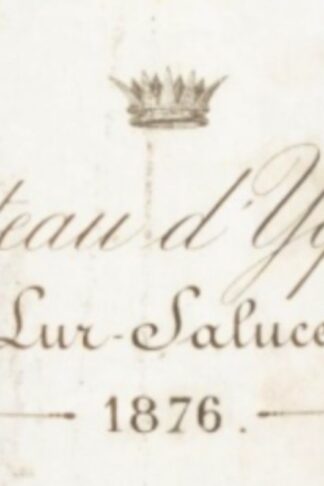
Specifically, the eight wines showcased Château d’Yquem 1847 (a famously great vintage of d’Yquem).
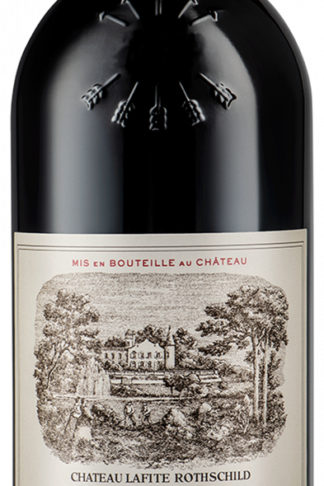
Furthermore, the other wines included Château Margaux 1847 and Château Lafite 1848.
Moreover, the wine list noted “Madère Retour de l’Inde 1810.”
Interestingly, this might be the same wine that we have in a bottle labelled as “1810 Rumo da India Madeira.”
In conclusion, even if this is not the Madeira served at the June 1867 dinner, it is a wine fit for an Emperor.