
A winery at Massandra, near Yalta on the Black Sea, has existed since the mid-19th century.
It was built to supply wines for the Tsar’s Summer Palace Livadia, also near Yalta, and catered for every conceivable vinous need of the Tsar—wines for Church Communion, for the Court, for social functions, and for the Tsar’s own personal consumption.
In order to ensure high standards, the Tsar employed Prince Lev Sergervich Golitzin to oversee production. Golitzin established the Massandra Collection by retaining bottles of every wine made, but he also augmented this with some of the finest wines from around the world.
The collection was further augmented in 1922, when Stalin ordered all wines found in the Tsar’s many palaces to be moved to the cellars. Just before the Nazi assault on Crimea in 1941, all the wine was removed to secret hiding places and brought back after the German army had departed.
Today, the Massandra library contains an unparalleled collection of wines going back to the nineteenth century. Wine is still made by the Massandra Collective, where a number of member estates employ 5,000 people and farm 4,400 acres (1,780ha) of vines.
The library retains a minimum of one bottle of every wine, but limited numbers of these are released for sale periodically.
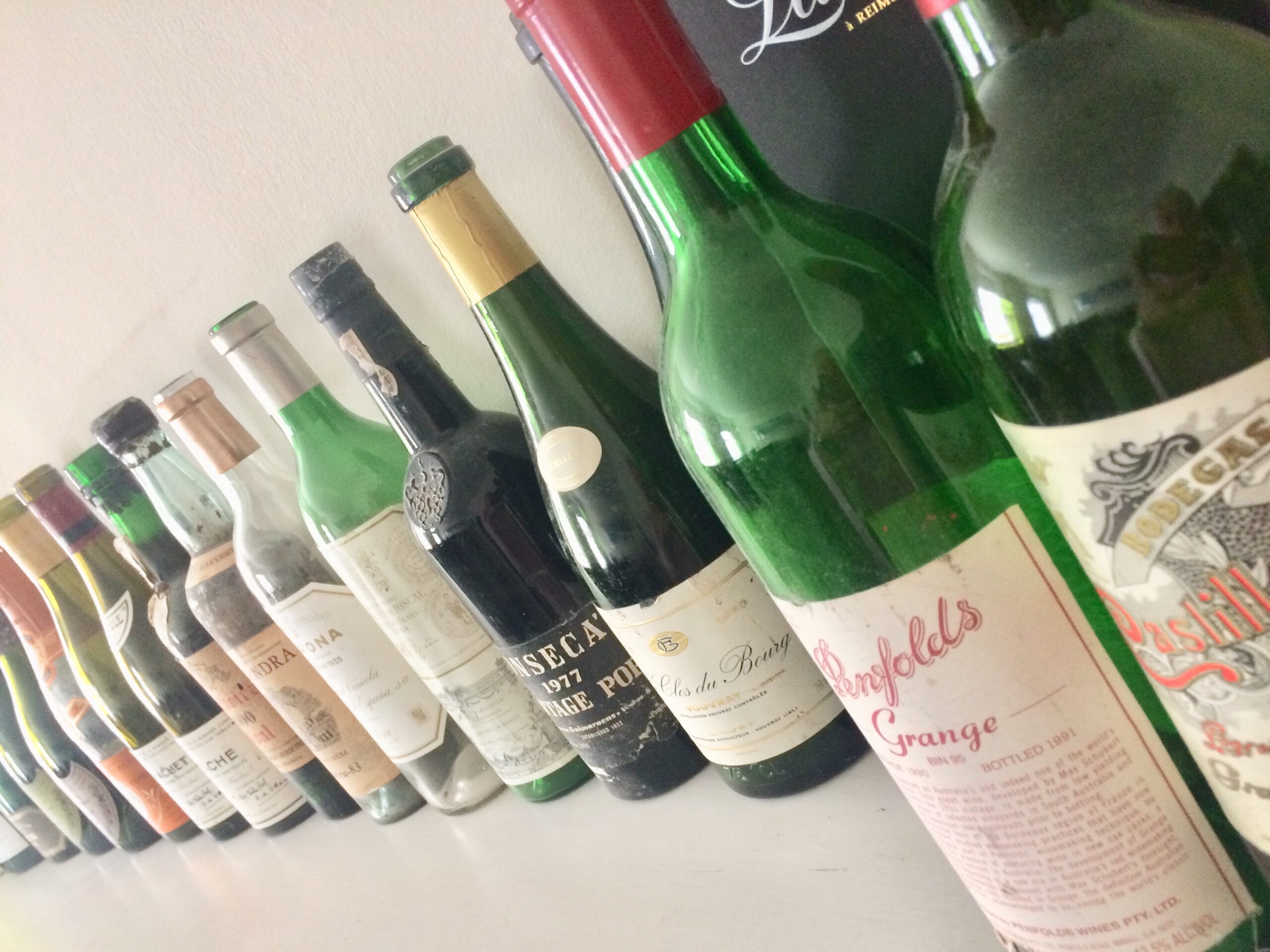
On 27th November 2007, the London auction house Bonhams held a sale of “Fine and Rare Wines, Featuring Massandra” in London. At a pre-sale tasting, a 1915 Massandra Collection Madeira–83 was shown.
(The bottle is seventh from the right.)
There is very little accurate technical information available on the wines. Apparently it was made from Sercial (40-50 % ), Verdelho (40-45 %), and the local Albillo Krymsky (5-20 %) grape.
The grapes are not late picked and there is no botrytis—in fact they are picked relatively early, retaining very high acidity levels and natural sugar. The wine ferments to 2.5% ABV before being fortified, thereby preserving the residual sugar and the high malic acid. The alcohol level is usually 16%, and there are no available records on residual sugar levels.
Sotheby’s was disappointed by the results of a 2004 sale of Massandra wines, which they said reflected “the fact that the Russian market for wine is not particularly developed at present.”
Since then, however, things have changed.
The Massandra Collection has survived the Russian Revolution, several major earthquakes, and the Nazi invasion.
Will it survive the Russian oligarchs…?
Stuart George | Founder & Managing Director | Arden Fine Wines
#ArdenFineWines #wine #finewine #winetime #winetasting #wineoftheday #winelove #sommelier #vintagewine #oldwine #rarewine #history #FineWineBusinessNetwork #Winetasting #Finewine #London #Mayfair #WineSearcher #Russianwine #вино #wine #massandra #массандра #мадера #крепленноевино #вечер #кумкват #сранныйкумкват #сырпесто #краснодар #кубань #белоевино #оранжевоевино #алкотека #алкотекакраснодар