
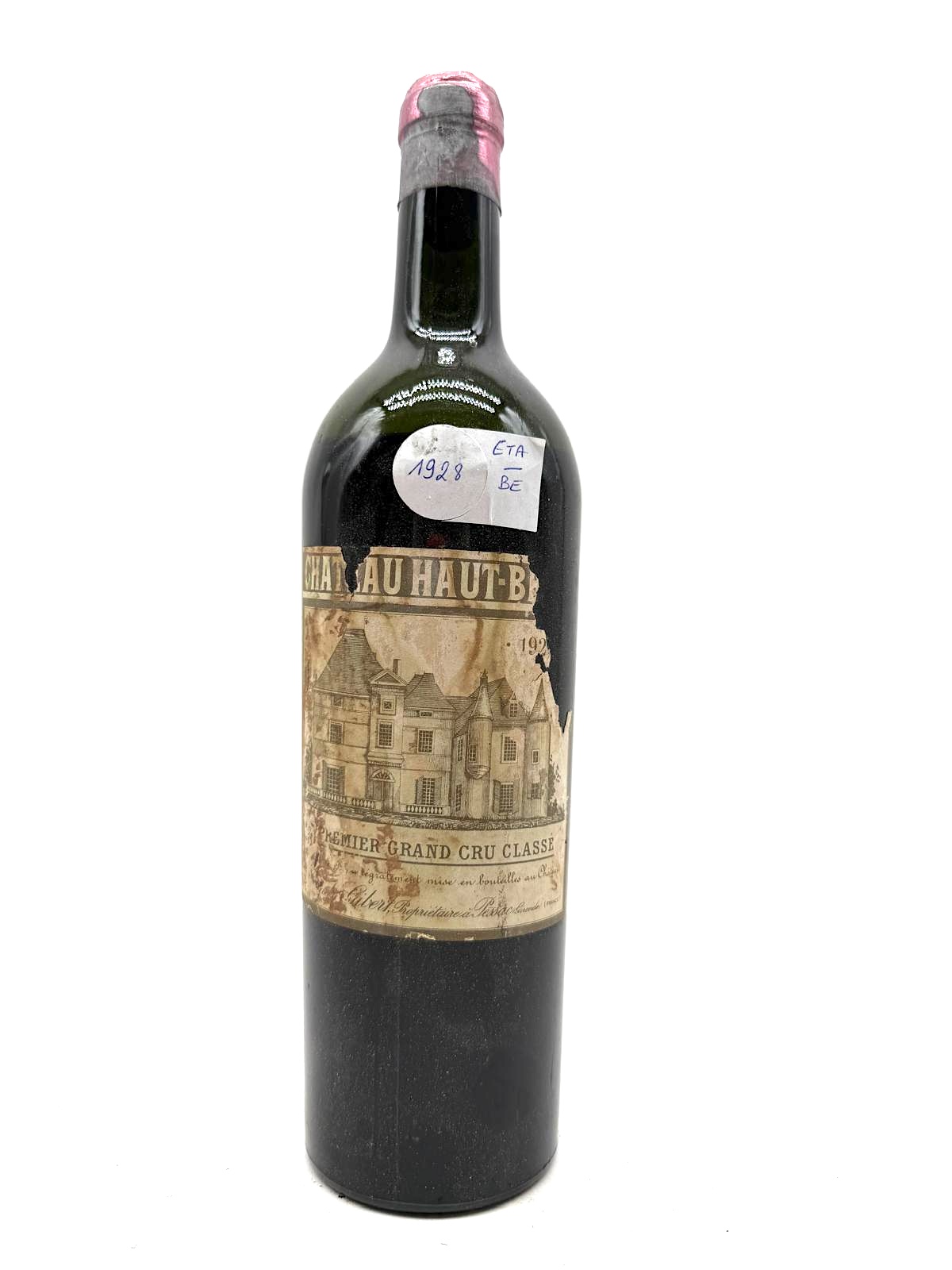
Arden Fine Wines provides information about Château Haut-Brion 1928 and old wine ullage.
A client recently queried about the “Fill (which) looks a little low” of this 1928 Château Haut-Brion.
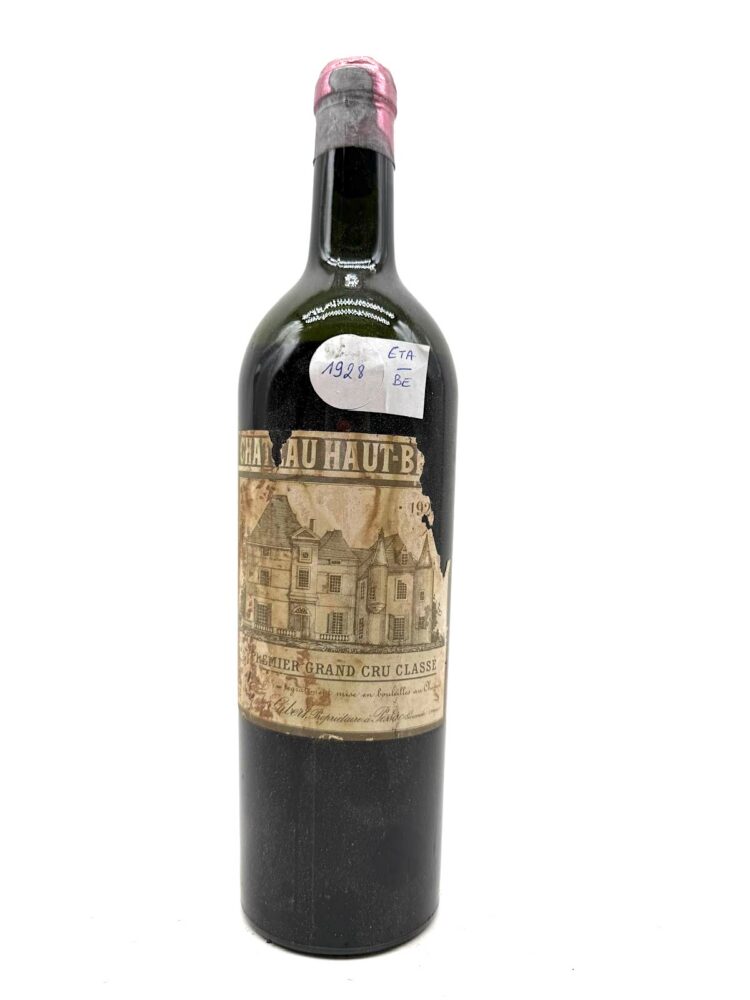
Château Haut-Brion 1928 and old wine ullage
A brief lesson in semantics (and winemaking):
The “fill” measures the distance from the surface of the wine to the top of the bottle.
The winemaker measures it with the bottle in an upright position at the time of bottling the wine.
This differs from the “ullage”.
The ullage measures the distance from the surface of the wine to the underside of the cork.
The winemaker measures it with the bottle in an upright position.
Cork remains porous and absorbent.
Ullage increases as the wine slowly evaporates through the cork.
Additionally, the cork absorbs some wine over time – if you store the wine correctly on its side, with the wine in contact with the cork.
A longer cork – typical of a top wine estate like Haut-Brion – can potentially absorb more wine and thus create more ullage than a shorter cork.
Overall, you will find old wines with high ullage as normal.
You will NOT find old wines with, say, ullage at mid-shoulder or above (unless someone has opened, topped-up, and recorked them, which should be declared)…
You can find this Château Haut-Brion 1928 (and sensible advice) at Arden Fine Wines.
The 1928 Château Haut-Brion is a highly-regarded First Growth Bordeaux red wine, known for its power and complexity.
The 1928 vintage was considered a very good year in Bordeaux, raising great hopes due to favourable weather conditions.
Château Haut-Brion 1928 is a powerful, concentrated, and rich wine.
The palate is noted for its complexity, with caramel, fresh blue and black fruits, and pronounced minerality, sometimes with a slight sweetness.
Award-winning Arden Fine Wines in London offers this 1928 red wine gift for sale.
A brief history of Château Haut Brion
In 1855, the highest distinction of Médoc wines, Premier Cru Classé (First Growth), honoured Château Haut Brion.
In due course, Château Haut Brion became the only non-Médoc domain to join the Médoc wine list and the Graves wine classification.
Although it is not the most concentrated, Haut-Brion, on the other hand, stands out as the most noble of wines from Pessac.
Moreover, the industry recognises its longevity as unparalleled.
In addition, wine enthusiasts always find the silky tannins exceptional.
Furthermore, Château Haut-Brion claims the title of the oldest and yet the smallest of Premiers Grands Crus.
Interestingly, historians trace the first mention of vineyards of Haut-Brion back to 1423.
Subsequently, Jean de Pontac founded Haut-Brion as a wine estate in 1525.
Under Pontac’s leadership, the wine, in fact, first bore the name of this noble and respectable family.
As a result, as its reputation grew, the estate’s name eventually replaced that of its owners.
The English diarist Samuel Pepys noted on Friday 10th April 1663 a visit to the “Royall Oak Tavern, in Lumbard Street…
And here drank a sort of French wine, called Ho Bryan…
That hath a good and most particular taste that I never met with.”