Description
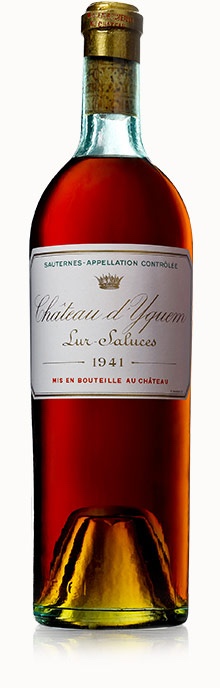
Find this Château d’Yquem 1941 price at Arden Fine Wines.
Older bottles often show signs of age, such as slightly damaged capsules and/or scuffed or damp-stained labels.
This is perfectly normal and does not mean that the wine is faulty or damaged, or that the bottle is a counterfeit or fake.
Buying from a reputable specialist merchant like Arden Fine Wines guarantees the best quality.
Are you looking to purchase a bottle of Château d’Yquem for a specific occasion, or are you researching the tasting history of this particular vintage?
Contact us here with any queries.
Château d’Yquem 1941 price
It was a very complicated year weather-wise.
Every month had much lower temperatures than average.
Furthermore, it rained a great deal from May to August.
The rain finally stopped in October, but it remained just as cold.
The harvest began in November (when half the crop was picked). There was frost on the 24th, 25th, and 26th October and the 1st–8th November non-stop, with temperatures dropping to as low as -4.5°C, with a maximum of just 3°C.
A Sauternes eiswein, perhaps?
It has a brownish-gold or dark caramel colour due to its significant age.
The nose has complex aromas of dried apricot, Seville orange marmalade, quince, and honey, often with a hint of earthy mustiness from old noble rot.
On the palate, it maintains a delicate balance of sweetness and acidity, with secondary flavours of dry caramel, burnt nuts, and raisins.
A short history of Château d’Yquem
Château d’Yquem in Sauternes stands out as the only wine classified as Premier Cru Supérieur in the 1855 classification.
Château d’Yquem almost had English origins.
During the Middle Ages, the King of England, who was also Duke of Aquitaine at the time, owned the estate.
In 1453, Charles VII regained southwest France under the dominion of the French crown and has kept it French ever since.
A century and a half later, in 1593, Jacques Sauvage, a descendant of a local noble family, received feudal tenure over Yquem.
The Gironde department archives, as well as those of the château, indicate that special winegrowing practices and late harvesting already existed at this time.
Furthermore, the château has hosted a vineyard since at least 1711, when Léon de Sauvage d’Yquem fully owned the estate.
Subsequently, in 1785, Françoise-Joséphine de Sauvage d’Yquem married Count Louis-Amédée de Lur-Saluces, and the estate passed to the Lur-Saluces family.
Notably, their descendants managed the property for over 200 years.
In fact, by the eighteenth century, people already recognized its wine as renowned.
After centuries of family ownership, Louis Vuitton-Moët-Hennessy purchased d’Yquem in 2000.
Then, in 2004, Pierre Lurton, MD at Château Cheval Blanc (another LVMH property), assumed control.
On average, Château d’Yquem produces only 65,000 bottles each year.
Moreover, the yield never exceeds 900 litres per hectare, compared to the usual 2,000 to 3,000 litres in Sauternes.
Interestingly, the legend states that just one glass of wine comes from each vine.